Insights on AML Compliance, Trends, and Best Practices
Articles and analysis on the trends in the ever-evolving industry.
Ministerial Directives: The Obligation Without a Threshold
A ministerial directive does not add a new report type. It removes your dollar thresholds for transactions connected to Russia, Iran or the DPRK. Who issues them, what the three in force require, the report marker teams miss, and why directive failures show up in penalty notices.
Read blog article
Why Is My FINTRAC Registration Taking So Long?
FINTRAC publishes one number for MSB registration: the majority of complete applications are processed within three months. Two words in that sentence do the work. What starts the clock, why renewals stall, and what the registry data shows changed in 2026.
Read blog article
SAR vs. STR: What Changes When You File in Both Jurisdictions
Canadian MSBs expanding into the US, and US businesses taking on Canadian customers, end up reporting to two financial intelligence units at once. FINTRAC and FinCEN ask different questions, start different timeframes, and aggregate transactions differently. What actually changes, and why the two filing flows should stay separate.
Read blog article
FINTRAC Exchange Rates: Using Bank of Canada Rates for the $10,000 Threshold
FINTRAC requires foreign currency transactions to be converted to Canadian dollars using the Bank of Canada rate to test the $10,000 reporting threshold. Here is how that works, where the Bank of Canada data runs out, and how to handle unlisted currencies and stablecoins like USDC and USDT.
Read blog article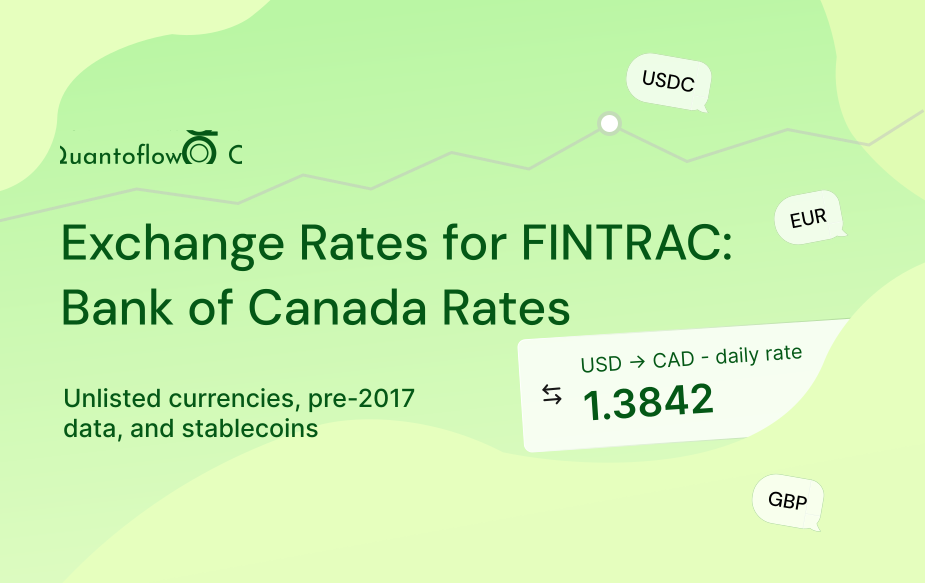
The FINTRAC 24-Hour Rule: Static Windows vs. Running Clocks
The PCMLTFR 24-hour rule says cash amounts totalling $10,000 or more within 24 consecutive hours are a single transaction. FINTRAC guidance describes static windows, but a running clock can catch transactions a static window misses. What the law says, where the readings part, and how to choose a method.
Read blog article
Can AI Write Your STR Narrative? What LLMs Do Well and Where They Create Risk
Using large language models to draft Suspicious Transaction Report narratives: what AI improves, where it invents or flattens, the confidentiality problem few plan for, and the division of labour that holds up under examination.
Read blog article
Manual vs Automated STR Reporting: What Actually Changes (and What Doesn't)
Manual and automated Suspicious Transaction Report workflows compared, for FINTRAC reporting entities. Where STR automation reduces risk, where it quietly adds risk, and the parts of the process no software can do.
Read blog article
FINTRAC Fines Surge: Why Filing and Compliance Gaps Are Costing Millions
Five years of FINTRAC enforcement show the same reporting failures behind record penalties. Which violations drew fines, and how to avoid them.
Read blog article
B2B, B2C: How Product Complexity Affects Reporting
Every product line you add maps the three FINTRAC transfer roles differently, and each one carries eight party permutations of its own. Why reporting gets harder as the product set grows, where the mapping breaks, and how to handle it through the API.
Read blog article
iGaming Ontario & FINTRAC Reporting: Why Standard Automation Doesn't Work Here
iGaming Ontario operators work within a compliance structure most FINTRAC automation tools weren't built for. Operators enter reports in the FWR portal, but iGO holds the Submit button. What that means for your workflow, and where automation helps.
Read blog article
PSP & FINTRAC Compliance: The Questions Still Open
As the RPAA matures and FINTRAC looks harder at payment service providers, compliance teams face questions nobody has settled: two-leg reporting, Travel Rule data gaps, crypto transaction fields, and what to do when guidance lags behind practice.
Read blog article
FINTRAC Mandatory and Optional Fields: A Compliance Guide
Which FINTRAC fields you must complete, which apply only sometimes, and which call for reasonable measures, with good practice for handling optional information in your reports.
Read blog article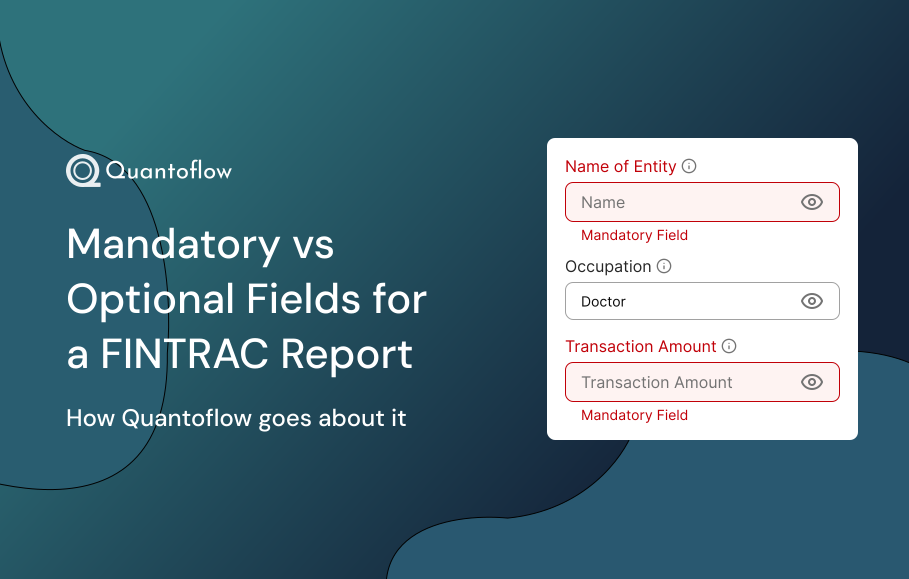
A Record $176M FINTRAC Fine: What Comes Next?
FINTRAC fined Cryptomus $176.9M, its largest penalty yet, for AML violations that included failing to report suspicious transactions linked to child exploitation, fraud and sanctions evasion.
Read blog article
What AML Leaders Are Talking About in 2025: Key Insights from the Toronto Conference
FINTRAC is enforcing harder. What AML professionals heard in Toronto about the shift from assessments to evaluations, and why being ready matters now.
Read blog article
Understanding FINTRAC's Intelligence Value and Enforcement Strategy
Where FINTRAC's intelligence goes, how its enforcement cases end, and why your reports matter to law enforcement, border security and financial oversight in Canada.
Read blog article